
01
Tracks
Debris, corrosion, distortion or damaged sections can affect shutter travel.
When an accordion shutter sticks, drags or will not lock, the problem is usually in the working hardware rather than the whole system. Omega inspects the actual failure, explains it, and recommends the repair that fits your shutter.
Start with the symptom
Selected issue: Will not open or close
What happens next
Inspect
Diagnose
Recommend
Repair & verify
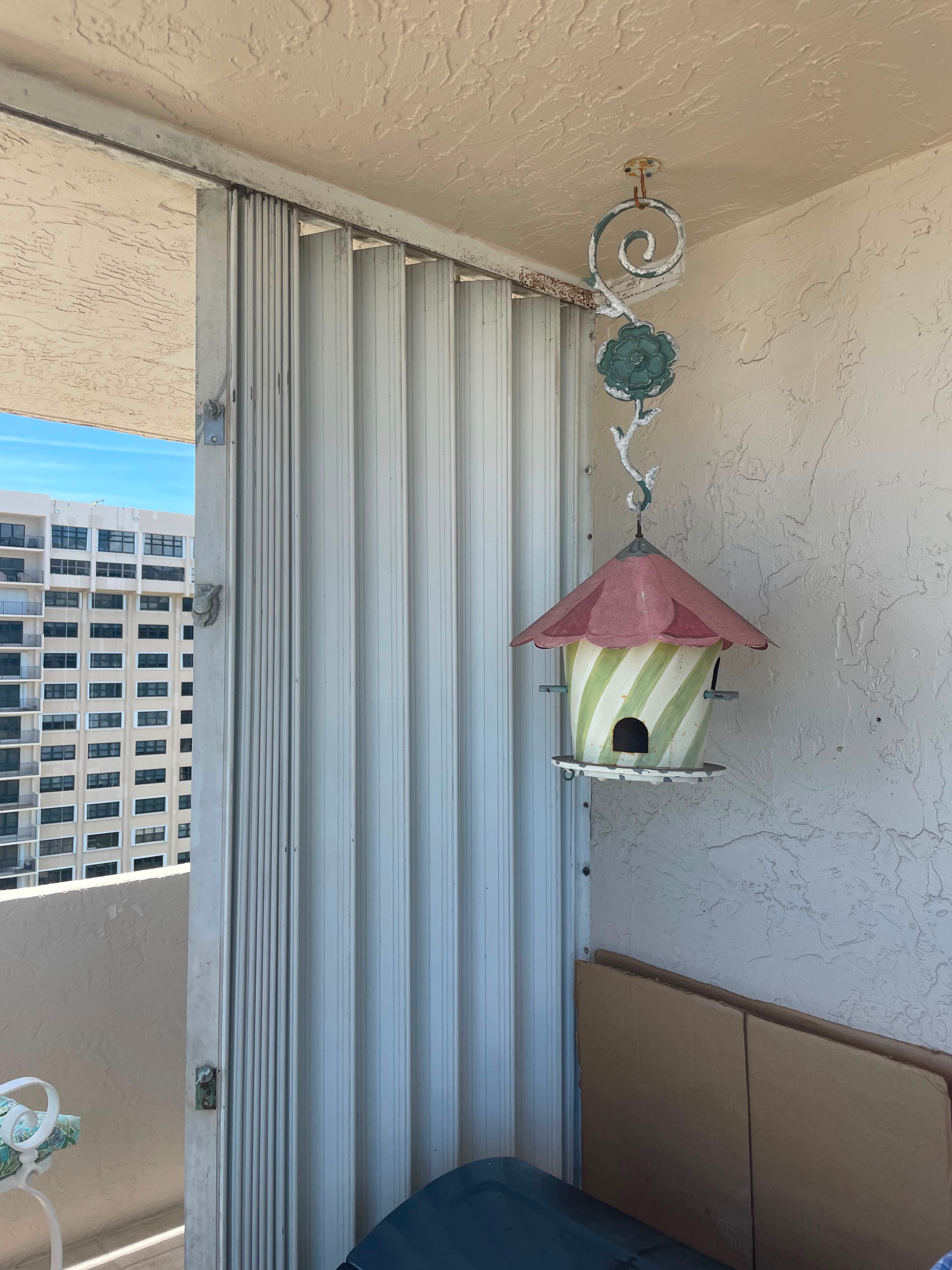
A repair-first approach
Find the failing component before choosing the fix.
Most repairs focus on individual components. We inspect the assembly first, then confirm what can be serviced on site.
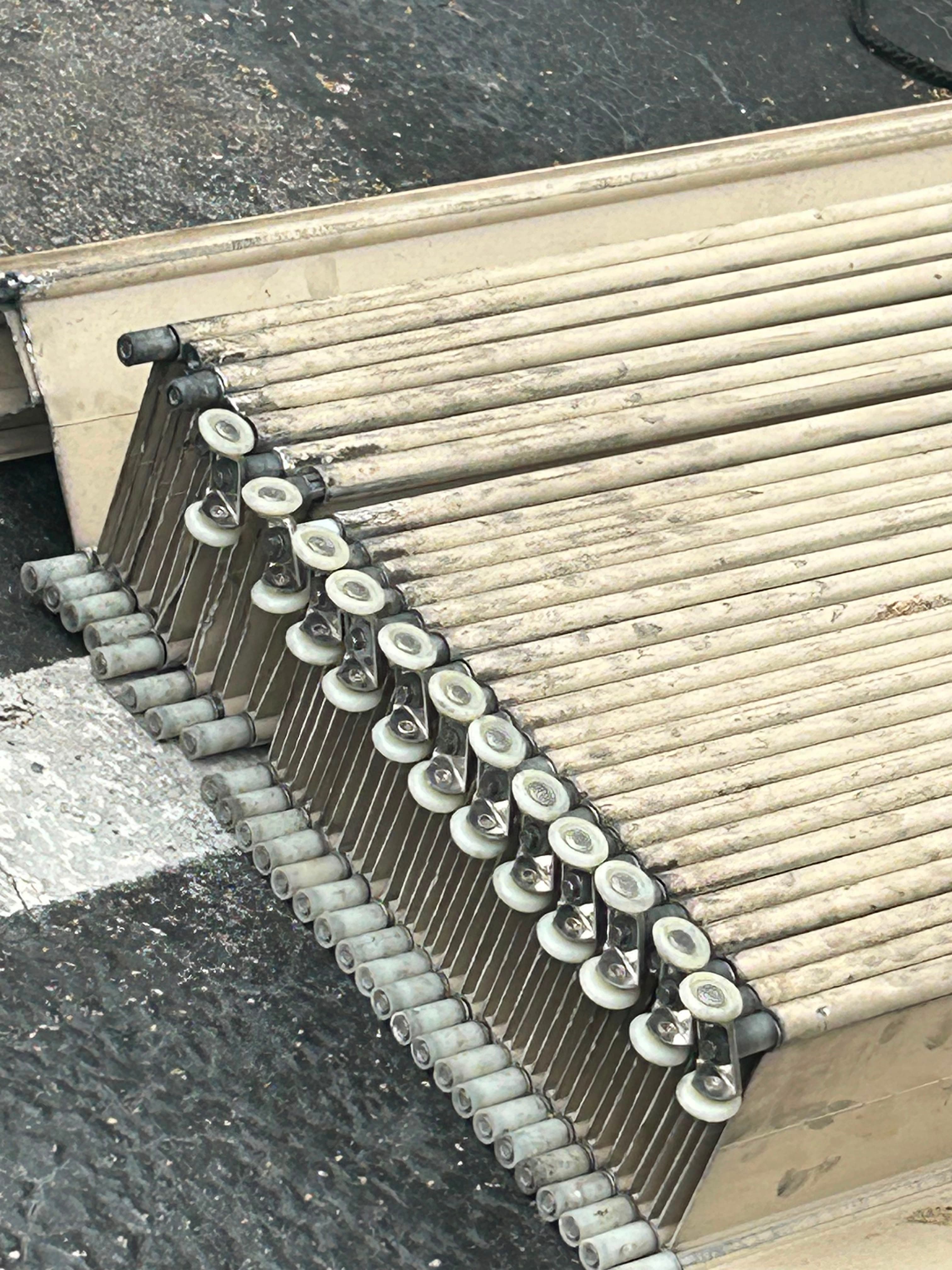
Component focus
Wheel carriers and shutter hardware
Debris, corrosion, distortion or damaged sections can affect shutter travel.
Worn wheels, seized bearings or corroded pins can create heavy resistance.
We check the lock, rod and receiving point for alignment and operation.
Loose, corroded or shifted attachments can affect how the assembly sits.
Wear or deformation can affect closing and the seal at the opening.
The shutter is cycled to check alignment across the full opening.
The important part
We confirm the failed component before recommending the fix.
A change in movement is usually the first clue. Grinding, catching, locking resistance or uneven panels can all point to different components—so the symptom narrows the inspection rather than deciding the repair on its own.
What it may indicate
Worn wheel carriers, contamination or corrosion in the track, or a shutter run that has moved out of alignment.
What gets inspected
Wheel carriers, track channel and blade alignment
What it may indicate
An obstruction in the guide path, a damaged track section, or a carrier that is no longer moving freely.
What gets inspected
Guide path, track condition and carrier movement
What it may indicate
Locking hardware may be misaligned with its pocket, a rod may be bent, or the components may be worn.
What gets inspected
Lock body, rod or pin and latch-pocket alignment
What it may indicate
The opening alignment, mounting points, individual blades or the bottom rail may need attention.
What gets inspected
Blade condition, mounting points and bottom rail
The important part
Track condition, carrier movement, alignment and locking hardware should be evaluated together before choosing the repair path.
Most failures develop through wear, contamination, corrosion or alignment problems. The visible symptom is only the starting point; the inspection identifies which component is actually involved.
Flattened wheels, stiff bearings or corroded axles increase resistance and make the shutter drag.
Failure chain
Salt, sand and debris can restrict the guide path and leave carriers moving over a rough surface.
Failure chain
A shifted opening, bent rod or worn latch can stop the locking hardware from lining up correctly.
Failure chain
Damage or wear at the bottom rail can affect how the curtain meets the sill and manages debris.
Failure chain
Loose, corroded or shifted mounting points can change track geometry and create binding.
Failure chain
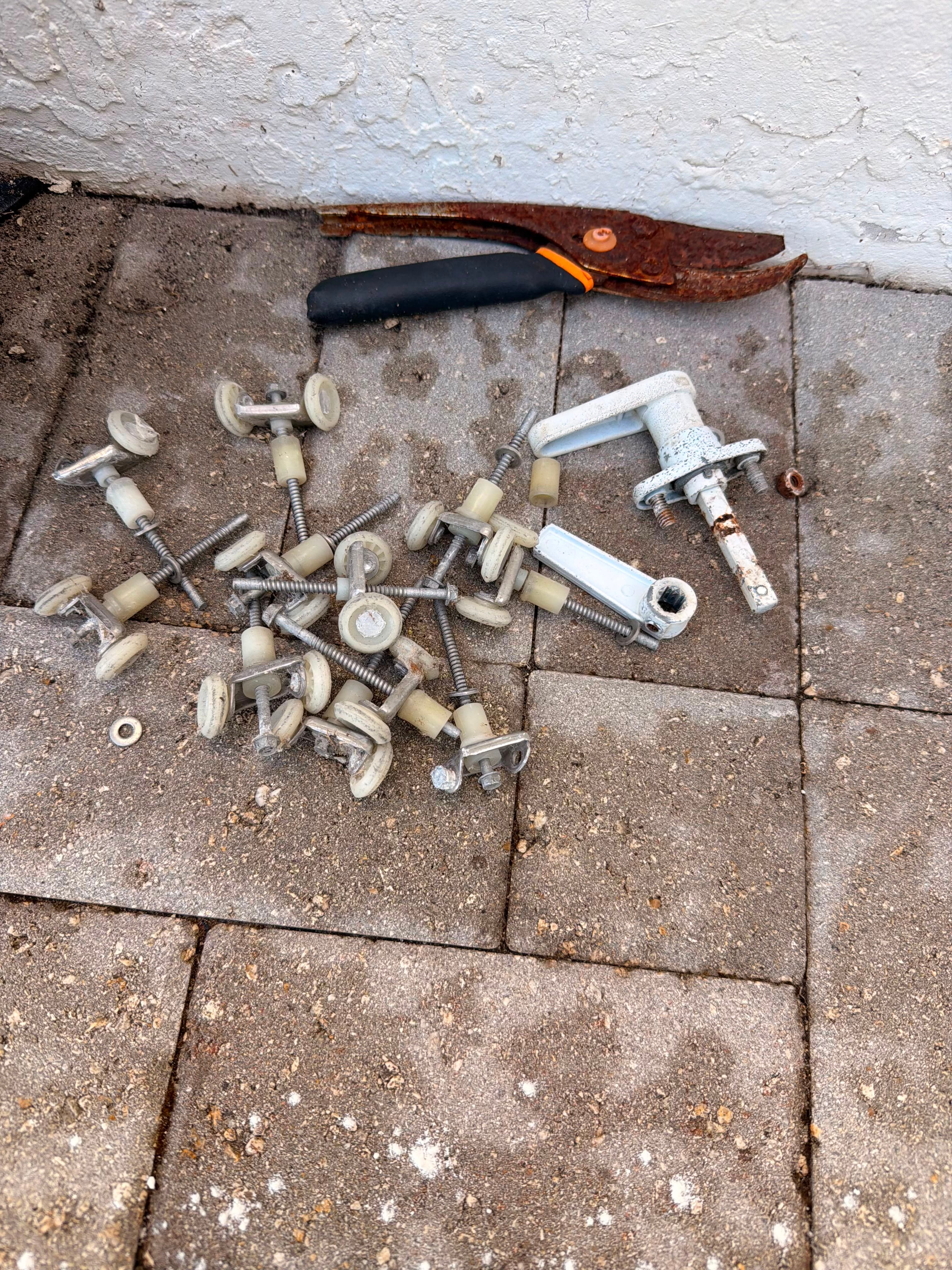
Removed during service
This field photo shows removed shutter hardware, including wheel carriers, brackets and a corroded lock assembly. The condition of individual parts helps determine whether the problem is localized or requires a broader repair.
The diagnosis comes before the quote. We inspect the shutter, identify the component or alignment issue behind the symptom, explain what we found, and only then carry out the repair. What the work involves depends on what the inspection finds and whether parts for your system are available.
We look at the whole assembly, not only where you noticed the problem: track condition, carrier movement, locking hardware, mounting points and how the curtain sits in the opening.
Findings are narrowed to what is actually causing the symptom. Where several components are involved, we identify which one is driving the others.
You get the diagnosis and the options before any work starts, including whether repair is the right path for the condition of the system.
The agreed work is carried out, then the shutter is cycled through its full travel and the lock checked. The job is not finished until it has been operated end to end.
Describe what the shutter is doing when you get in touch — dragging, stopping part way, or not locking. That is where the inspection starts.
Four field stages: inspect, diagnose, repair and verify.
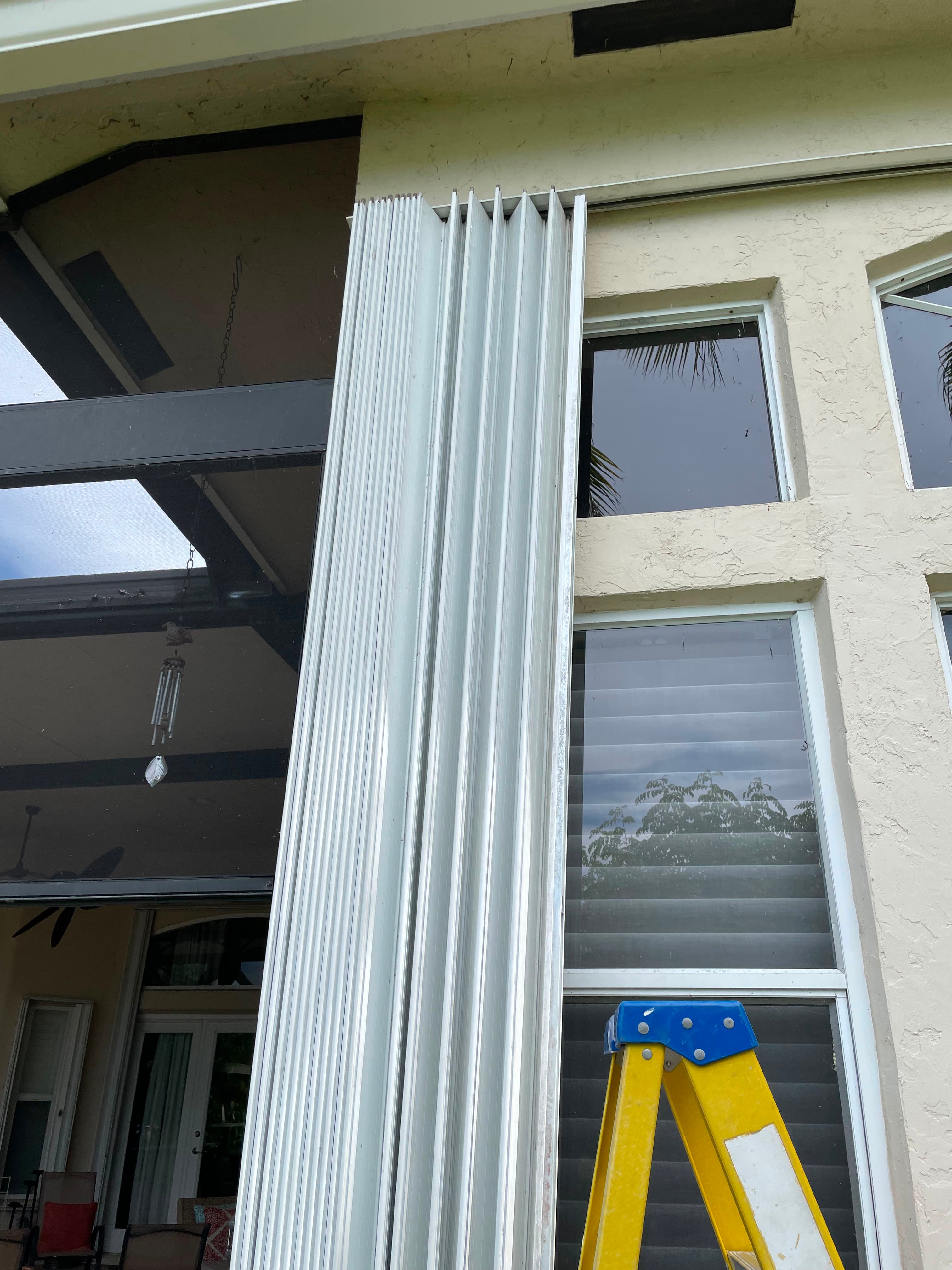 01Inspect
Access the opening and inspect the track, curtain and hardware.
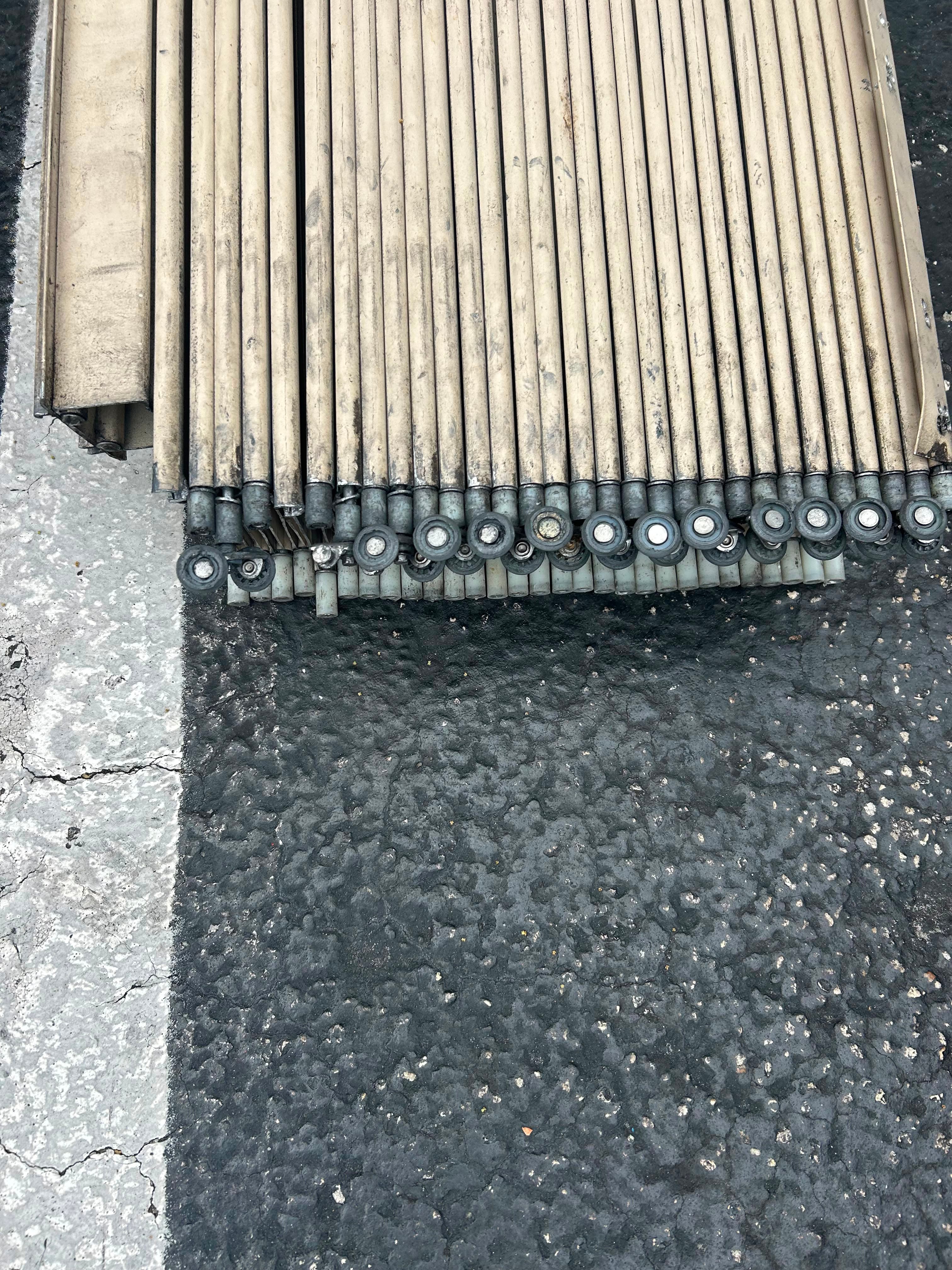 02Diagnose
Examine the components to identify the failed or worn part.
03RepairRemove and address the hardware that needs attention.
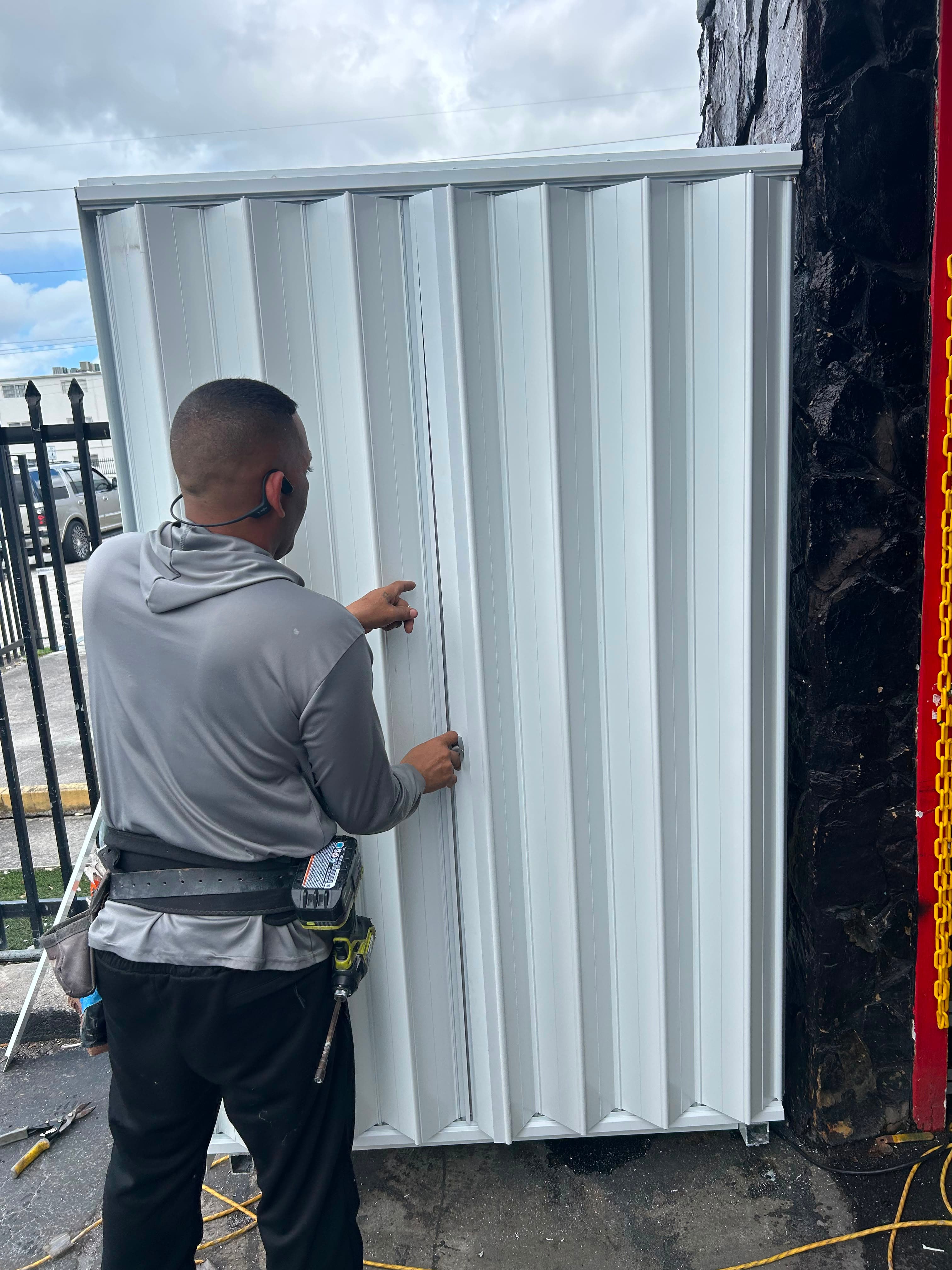 04Verify
Close the shutter and check the centre lock before completion.
These photographs illustrate the repair stages; the actual scope depends on what the inspection finds.
HVHZ is a geographic/code designation—not a contractor certification. For shutter work, the practical questions are where the property sits, what product is installed, and what the proposed work changes.
Miami-Dade and Broward are in the High-Velocity Hurricane Zone. Palm Beach is outside HVHZ, with separate wind-borne-debris requirements.
Opening-protection systems may need current Miami-Dade NOA or Florida Product Approval documentation covering the product and installation.
A repair is different from installing a new system. Changes to approved components or anchoring can affect the documentation that applies.
Permit question
Permit requirements depend on the scope of work and the authority having jurisdiction. Repairs that alter anchoring or the approved configuration may need a different review than routine maintenance.
Review permit servicesVerify the approval
If someone else installed the shutters, the approval record can help confirm how the system was originally documented.
Product approval, installation details and the actual repair scope should be considered together.
Broward • Miami-Dade • Palm Beach
It depends on the condition of the system—not age alone. We inspect the failure first, then explain the practical options.
A condition assessment helps determine whether repair or replacement is the more appropriate path.
The useful maintenance check is simple: operate the shutter, watch how it moves, and inspect the parts that guide, lock and support it.
Routine check
Operate each shutter periodically rather than leaving it unused for long periods. Pay closer attention where exposure is harsher or the shutter is rarely moved, and follow the manufacturer's schedule when one is available.
What to inspect
Keep the upper and lower channels clear of sand, salt and debris.
Check that the wheels move freely without binding or unusual resistance.
Operate the lock periodically and watch for stiffness or poor alignment.
Movement should remain smooth and consistent across the full run.
Look for cracking, deformation or missing sections at the sill.
Check visible fixings for looseness, movement or corrosion staining.
Safety first
Clean reachable tracks as routine maintenance, but do not force a jammed shutter, work at height, or dismantle loaded hardware. Use the manufacturer's approved products and instructions for lubrication.
Maintenance is about noticing changes early—not forcing a system that is already binding.
Check the shutter early, describe exactly what it is doing, and avoid forcing a system that is jammed or damaged.
A shutter that closes and locks is different from one that will not reach the closed position. Note where it stops.
Track debris, carriers and locks are different from damaged blades, tracks or anchors—and may need a different repair scope.
Stop before forcing the system, working at height or removing hardware. Get help and plan an alternative for the opening if needed.
Safety first
Tell us what the shutter is doing and where it stops. Do not force a jammed shutter or dismantle hardware under storm pressure.
Accordion shutter repair starts with diagnosis. The goal is to identify what actually failed, understand the condition of the system, and then recommend the appropriate repair.
Doors, windows and shutters across the same coastal market.
We identify the failed component before recommending the repair.
Service coverage across the three approved South Florida counties.
We can assess and service accordion shutters installed by others.
Based in Fort Lauderdale
4972 SW 35th Terrace, Fort Lauderdale, FL 33312
The emphasis is simple: inspect the shutter, identify the problem, and repair the part that actually needs attention.
What we are checking
Center posts, lock engagement and shutter alignment
Need an accordion shutter assessed?
Tell us what the shutter is doing and we can start with the problem you are seeing.
Customer feedback stays labeled by service so the proof remains clear and contextual.
“Fast and reliable service for accordion shutters and sliding tracks. Now everything operates effortlessly and we feel ready for storm season. Thank you for the peace of mind!”
“My sliding glass door was impossible to open. Ben's crew came out the same day, replaced the rollers, and now it glides with one finger! Amazing craftsmanship and fair pricing.”
“We hired Omega to service the sliding impact doors for our patio. The team was professional, clean, and realigned the tracks perfectly. Smooth sliding and tight seals!”
The featured review is tied to accordion shutter service; other reviews remain labeled by their original service.
Explore local accordion shutter repair coverage across Broward, Miami-Dade and Palm Beach counties.
Service Area
Service Area
Service Area
Don't see your city?
Explore the full service-area directory for additional locations.
Yes. We service accordion shutters regardless of who installed them. Hardware differs between manufacturers and system ages, so part of the inspection is identifying what your system uses and whether matching components are obtainable.
There is no standard rate. Cost follows which component failed, how many openings are affected, how accessible the shutter is, the condition of the system and parts availability. We establish those on site and give you the scope and pricing before work begins.
It depends on what the inspection finds. Clearing and adjusting a mechanically sound shutter is a shorter job than one needing components replaced, and parts availability for older systems can extend the timeline.
Common causes are restricted movement in the track, worn or seized wheel carriers, alignment problems across the opening, and locking hardware that no longer lines up with its pocket. Inspection confirms which of those it is.
Sometimes. It depends on the scope of the work and on your jurisdiction, so it is confirmed per project rather than by a general rule. See the HVHZ section above for how that is decided.
It is a Florida Building Code designation — High-Velocity Hurricane Zone — covering Miami-Dade and Broward, where opening-protection requirements are the strictest in the state. It affects which product approvals apply to your shutters, not who may work on them.
Often enough to find a problem before you need the shutter, and more often where exposure is harsher. The maintenance section above covers what to check and how to judge the interval for your system.
Whatever the manufacturer specifies for your system — these shutters mix aluminium, stainless and nylon parts, so no single product suits them all. The maintenance section above explains what to avoid and why.
Tell us what the shutter is doing — dragging, stopping part way, or not locking — and which opening it is on. We inspect, identify the cause and set out the repair before any work starts.
Accordion shutter repair coverage
Omega Doors & Windows · 4972 SW 35th Terrace, Fort Lauderdale, FL 33312 · See all service areas