
Why Is My Impact Window Foggy or Bubbling? (And Can It Be Repaired?)
Your glass didn't get dirty. Its perimeter seal failed, and moisture got where it shouldn't be. Here's what is actually happening inside your window—and how technicians fix it.
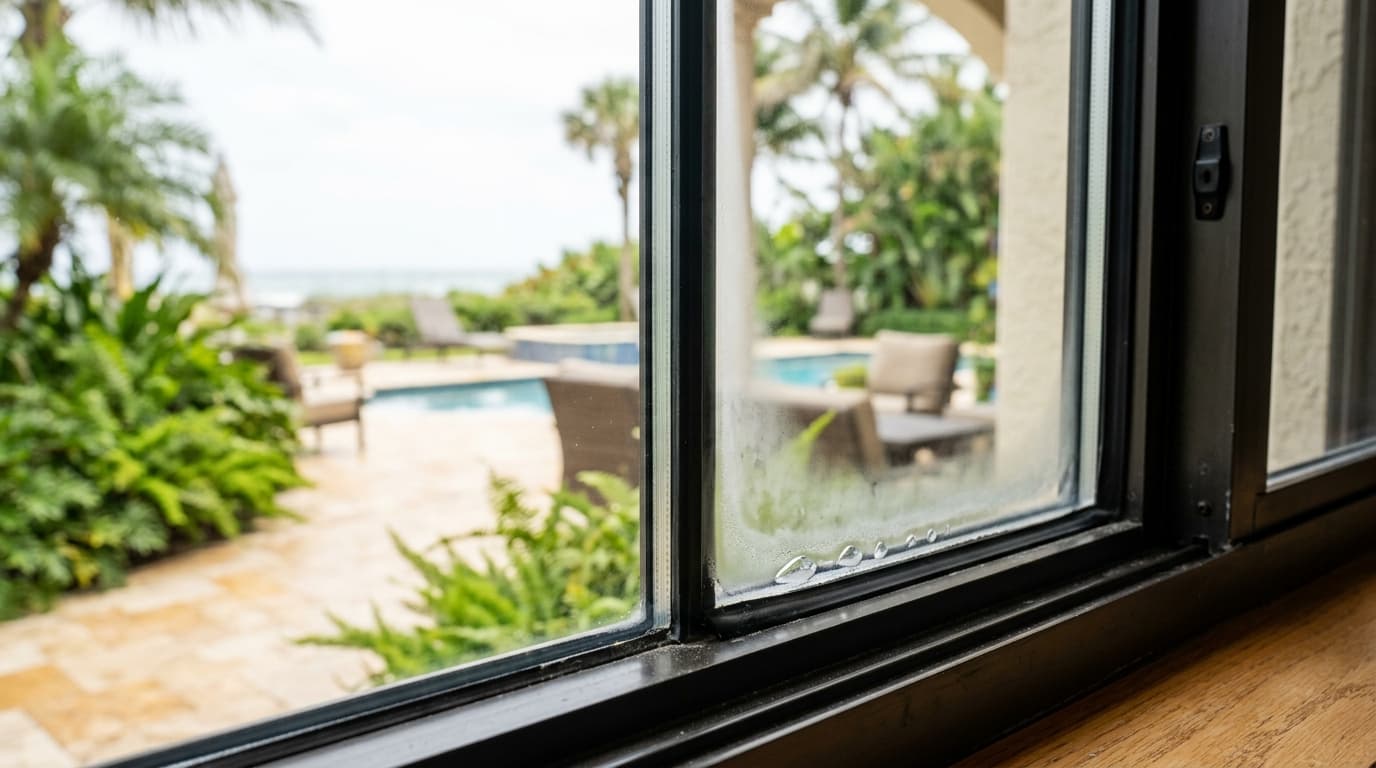
You wipe the interior of your impact window, then walk outside and scrub the exterior, but the cloudy film remains untouched. Or worse, you notice small, circular bubbles trapped beneath the surface of the glass that refuse to budge. The short explanation is simple: your glass didn't get dirty. Its perimeter seal failed, and water got where it shouldn't be. Whether that requires a localized glass reglazing or an evaluation of your entire sash depends entirely on which specific failure mechanism has taken place.
Most generic online guides discuss foggy glass as if all residential windows are standard double-pane units. They aren't. Impact-resistant windows are engineered with fundamentally different construction standards to withstand severe hurricane-force pressures, and that difference changes both the diagnostic process and the proper repair method.
IGU Fog vs. Delamination — They're Not the Same Thing
In conventional construction, an insulated glass unit (IGU) consists of two glass panes separated by an aluminum or composite spacer, creating an interior air chamber typically charged with dry air or inert argon gas. When the seal bounding that air pocket deteriorates, outside air and humidity penetrate the cavity. Because the desiccants inside the spacer quickly become saturated, moisture condenses evenly against the interior glass faces. You see a uniform, continuous haze across the entire viewing area.
Impact glass, by contrast, relies on laminated safety glass. A standard impact unit bonds two heavy sheets of glass together under intense heat and pressure using a tough, transparent polymer interlayer—most commonly polyvinyl butyral (PVB) or SentryGlas (SGP). This interlayer is the critical component that absorbs impact energy and keeps the glass intact if struck by windborne debris.
When the perimeter edge seal of an impact unit breaks down, atmospheric moisture and rainwater enter the window sash and pool against the edge of the laminate. PVB is naturally hygroscopic, meaning it absorbs moisture from its surroundings. When exposed to persistent water, the adhesive chemical bond between the glass and the plastic interlayer breaks down.
The visible result is not an even, misty haze. Instead, you will see cloudy, milky streaks starting along the edges or corners, frequently accompanied by distinct circular bubbles where the laminate has physically unbonded from the glass sheet. That condition is known as delamination, and it represents an entirely different physical issue than standard IGU fog.
At a Glance: Standard IGU Fog vs. Impact Glass Delamination
Understanding the glass construction dictates whether moisture can be managed or the pane requires reglazing.
Insulated Air-Cavity Seal Failure
- 1Construction: Two separate glass panes separated by an air spacer and filled with dry air or inert gas.
- 2Failure Mode: Perimeter seal breaks, allowing moisture-laden air to seep into the empty interior cavity.
- 3Visible Symptom: Uniform, continuous haze or condensation across the middle of the glass pane.
- 4Remedy: Replace the insulated glass unit (IGU); DIY defogging kits only offer temporary cosmetic relief.
Interlayer Separation & Delamination
- 1Construction: Two panes bonded tightly under heat and pressure to a clear polyvinyl butyral (PVB) or SGP interlayer.
- 2Failure Mode: Outer edge sealant deteriorates; moisture reaches the hygroscopic interlayer and breaks the adhesive bond.
- 3Visible Symptom: Cloudy edge patches, milky discoloration along margins, and distinctive circular trapped bubbles.
- 4Remedy: The glass unit must be deglazed and replaced. Defogging drills cannot separate bonded laminated layers.
If you see distinct bubbles or milky rings creeping inward from the bottom or side corners of the glass, your window is experiencing delamination. The glass layers have physically begun separating.
Is a Foggy or Bubbling Impact Window Still Safe?
From an everyday aesthetic perspective, delamination is initially just an unsightly blemish that obscures your view. But from a structural and weather-resistance perspective, a delaminated window warrants timely professional evaluation.
Condition & Performance Considerations
The core function of an impact window during a severe tropical storm or hurricane is to maintain the building envelope. When windborne debris impacts the outer pane, the glass may crack, but the bonded PVB interlayer stretches and holds the shards securely in place, preventing high-pressure winds from breaching the interior of your home.
When moisture compromises that adhesive bond over months or years, the interlayer's energy-absorbing integrity can be degraded in the affected areas. While the window may still withstand ordinary daily wind, prolonged delamination means you cannot verify that the unit will perform to its original certified design pressure during an extreme storm event.
For this reason, building professionals and window specialists advise having any bubbling or delaminating unit inspected well before storm season arrives. Addressing the issue early ensures your openings remain reliable when severe weather threatens.
Repair vs. Replace — How Technicians Decide
The most reassuring news for homeowners is that delaminated glass rarely requires tearing out the entire window frame. In the vast majority of South Florida homes, the structural aluminum or vinyl window frame and its anchorage into the masonry or concrete opening remain perfectly sound.
Rather than paying for a costly, disruptive full-frame demolition—which damages exterior stucco, requires new municipal framing permits, and disrupts interior drywall—our technicians frequently perform glass-only reglazing. We carefully remove the interior stops, extract the compromised laminated glass unit, clean and prepare the sash channel, and install a brand-new, factory-sealed impact glass unit that matches your original manufacturer specifications.
The 3 Diagnostic Stages: How We Evaluate Your Window
A physical inspection determines whether a targeted glass swap preserves your sound frame or full replacement is required.
Stage 1: Haze Without Bubbles
Early-stage moisture or superficial seal breakdown
If inspection reveals moisture beginning at the extreme perimeter without physical bubble formation, a targeted re-seal can sometimes slow progress. However, technicians will clearly explain this is typically an interim measure rather than a permanent restoration if moisture has already contacted the interlayer.
Stage 2: Bubbling or Cloudy Discoloration
Active interlayer delamination
Bubbles mean the PVB interlayer has physically separated from the glass. The glass unit itself must be replaced, but in almost all residential installations, the heavy aluminum or vinyl frame remains completely sound. Technicians de-glaze the failed pane and insert a custom-fitted impact glass unit without altering your wall structure.
Stage 3: Frame Distortion, Corrosion, or Water Intrusion
Structural sash or wall opening failure
When moisture intrusion has progressed to frame corrosion, sill swelling, or structural racking that compromises latching and weatherseals, glass-only replacement is insufficient. At this stage, a full impact window frame replacement is needed to protect your home's structural envelope.
Full window replacement is generally reserved for situations where long-term water intrusion has corroded the underlying aluminum sash, warped the framing channels, or damaged the surrounding structural rough opening. When evaluating your home, an honest technician will clearly identify whether reglazing the glass solves the failure or if structural frame damage requires broader remediation.
Why This Shows Up Faster in South Florida
Homeowners in Broward, Miami-Dade, and Palm Beach County see perimeter seal deterioration on a noticeably accelerated timeline compared to inland parts of the country. Several overlapping regional environmental factors explain why:
- Intense Ultraviolet Radiation: South Florida regularly experiences peak solar radiation where the UV index reaches 10 to 11 for extended stretches of the spring and summer. High UV exposure accelerates the photochemical oxidation of elastomeric sealants, silicone gaskets, and glazing tapes, causing them to dry out, shrink, and lose elasticity.
- Airborne Salt Aerosols: In coastal corridors—such as Fort Lauderdale beach neighborhoods, Las Olas, Rio Vista, Boca Raton, and coastal Palm Beach—salt air carries microscopic chloride particles. Salt accumulation breaks down perimeter seals and promotes galvanic corrosion where metal glazing beads meet glass surfaces.
- Thermal Expansion & Contraction: During hot summer afternoons, dark-finished aluminum frames and glass panels heat up significantly, expanding at different rates. Sudden tropical downpours cool the exterior rapidly, creating thermal shock and mechanical shear stress along the sealant perimeter day after day.
- Standing Water in Sash Channels: Driven rain can overwhelm clogged sash weep holes. If water remains trapped at the base of the glass rather than draining freely, the bottom edge of the laminated unit sits submerged in moisture, rapidly accelerating edge delamination.
Because of these combined factors, exterior perimeter seals in coastal environments can exhibit accelerated wear, making periodic inspection of your window perimeter seals a prudent maintenance practice.
Plan Ahead: Why Preventative Service Matters Before Storm Season
Discovering compromised laminated glass when a tropical depression is named in August or September puts homeowners in an avoidable bind. Custom-ordered impact glass units require precise factory manufacturing, tempering, autoclave laminating, and delivery scheduling.
During peak hurricane season, glass fabricators and regional repair crews face extraordinary demand. Scheduling an inspection during the late winter or early spring allows technicians to measure your exact glass dimensions, source matching Low-E coatings or tints, and complete your reglazing calmly on your schedule.
Frequently Asked Questions
Can foggy impact glass just be defogged instead of replaced?
How much does it cost to replace the glass vs. the whole window?
Does homeowners insurance cover impact window seal failure?
Notice Foggy Glass or Bubbling Along Your Window Edges?
Our licensed South Florida technicians provide component-level diagnostic inspections across Broward, Miami-Dade, and Palm Beach. We will inspect your seals, verify frame soundness, and give you an honest recommendation on glass-only reglazing.
Related Homeowner Guides & Services
Do Impact Windows Lower Your Homeowners Insurance in Florida?
Learn how certified opening protection under Florida Statute § 627.0629 qualifies your home for wind mitigation credits on your premium.
Impact Window Repair & Reglazing Services
Explore professional glass-only replacement, hardware restoration, and weatherseal repairs across South Florida.
Sliding Glass Door Repair Across South Florida
Precision stainless steel roller replacement, track restoration, and multi-panel alignment for heavy impact doors.